
Beyond the Physical: Why Baseline Functional Screening Is Changing Workplace Safety
Every organization tracks workplace injuries.
But the most progressive organizations are beginning to ask a different question:
"How do we prevent the injury from happening in the first place?"
For decades, workplace safety has relied on lagging indicators, workers' compensation claims, OSHA recordables, lost-time injuries, and incident investigations. While these metrics are important, they only tell us what has already happened.
Today's workforce deserves something better.
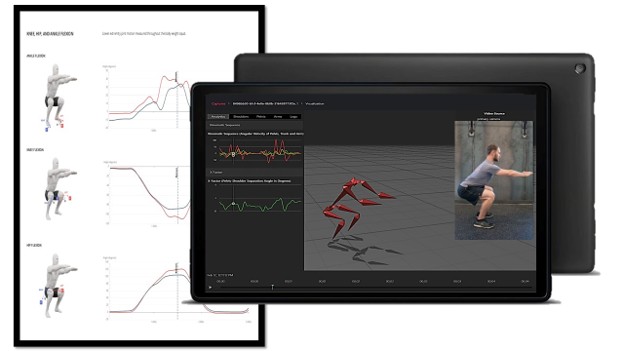
That's why DataFit developed the LiftSmart Insight360 program, a movement-based Functional Abilities Screen (FAS) that gives employers objective insight into employee readiness before injuries occur. Rather than reacting to injuries, organizations can identify movement deficiencies, reduce ergonomic risk, and measure improvements over time.
Every Employee Has a Different Risk Profile
Two employees may perform the exact same job.
They may lift the same boxes.
Operate the same equipment.
Walk the same warehouse floor.
Yet one employee finishes the day without issue while another slowly develops shoulder pain, lower back discomfort, or balance problems that eventually become a workers' compensation claim.
Why?
Because the risk isn't always the job.
Often, it's how the employee's body performs the job.
The LiftSmart Functional Abilities Screen evaluates the quality of movement, not simply whether an employee can complete a task.
The assessment objectively measures functional movement patterns including:
- Squat mechanics
- Hip, knee, and ankle mobility
- Knee alignment
- Hip versus knee dominance during lifting
- Trunk and pelvic rotation
- Shoulder mobility
- Balance and postural stability
Each measurement provides insight into movement quality and the potential biomechanical stresses placed on the body during everyday work activities.
Looking Beyond Strength
Many organizations assume that if an employee can lift a box, they're physically prepared for the job.
But strength alone doesn't prevent injuries.
Movement quality does.
For example, the LiftSmart FAS report evaluates squat mechanics to identify movement compensations that often go unnoticed during routine work.
The report measures:
- Hip mobility
- Knee mobility
- Ankle dorsiflexion
- Hip-to-knee movement dominance
- Knee tracking
- Foot rotation
These aren't fitness metrics.
They're workplace risk indicators.
Even subtle movement limitations can increase spinal loading, alter lifting mechanics, and contribute to cumulative musculoskeletal strain over thousands of repetitive lifts.
Small Movement Problems Become Big Workplace Problems
The LiftSmart assessment also measures trunk and pelvic rotation, an often-overlooked component of occupational safety.
Why does this matter?
Because twisting while carrying, lifting, or reaching is one of the most common contributors to lower back injuries.
The report identifies:
- Pelvis-to-trunk separation
- Pelvic rotation
- Trunk rotation
- Side-to-side asymmetries
Restricted rotational movement often forces employees to compensate through the lumbar spine, increasing stress during repetitive material handling. This type of information gives safety professionals an opportunity to intervene before pain becomes an injury.
Balance Is More Than Fall Prevention
Most people associate balance with slips, trips, and falls.
LiftSmart looks much deeper.
The assessment evaluates:
- Sway displacement
- Sway velocity
- Balance time
- Medial-lateral stability
- Anterior-posterior stability
Higher sway measurements indicate reduced postural control and dynamic stability, both of which may increase the likelihood of injuries during lifting, carrying, climbing, or navigating uneven surfaces.
Balance isn't just about standing still.
It's about maintaining control while moving through demanding work environments.
The Power of a Baseline
Perhaps the greatest value of LiftSmart isn't what it tells you today.
It's what it tells you next year.
The initial assessment establishes an objective baseline for every employee.
From there, organizations can compare future assessments to answer questions like:
- Has shoulder mobility improved?
- Has balance declined?
- Are repetitive tasks creating new movement compensations?
- Are ergonomic improvements reducing physical risk?
- Is our wellness program actually improving employee function?
Instead of guessing, organizations gain measurable evidence that supports proactive decision-making.
Measuring the Success of Safety Programs
Many companies invest heavily in ergonomics.
Stretching programs.
Wellness initiatives.
Lift-assist devices.
Job rotation.
But very few can objectively answer one question:
"Are these programs actually working?"
LiftSmart provides that answer.
Year-over-year comparisons allow organizations to measure changes in employee movement quality, helping determine whether interventions are improving mobility, stability, lifting mechanics, and overall workforce readiness.
As one manufacturing safety leader shared:
"The year-over-year comparison report will become one of our most valuable safety tools. We can measure whether our ergonomics program is actually improving employee movement—not just reducing incidents."
— Safety Director, Manufacturing Company
Better Data Leads to Better Decisions
The value of functional movement data extends far beyond injury prevention.
Organizations are using LiftSmart to support:
- Ergonomic risk reduction
- Fit-for-duty evaluations
- Return-to-work planning
- Workforce readiness assessments
- Employee wellness initiatives
- Physical job matching
- Occupational health programs
Because every recommendation is based on objective movement data, safety teams can make informed decisions with greater confidence.
As one Environmental Health & Safety Manager explained:
"LiftSmart has completely changed how we think about injury prevention. Instead of reacting to workers' compensation claims, we're identifying risks during annual screenings and addressing them before they become injuries."
— EHS Director, Recycling Organization
Turning Data Into Action
One of the strengths of the LiftSmart report is that it doesn't simply identify potential risk, it explains why those risks matter.
Each section includes occupational significance, helping safety professionals understand how movement deficiencies may affect workplace performance.
For example, the report highlights that:
- Reduced ankle mobility can contribute to poor squat mechanics and increased trunk lean.
- Limited trunk mobility can increase compensatory spinal stress during lifting and carrying.
- Greater postural sway may indicate reduced stability and increased fall risk.
- Shoulder mobility limitations can increase overhead strain and upper back loading.
These insights create opportunities for targeted interventions before injuries occur.
Building a Safer Workforce Every Year
The most successful safety programs don't focus solely on compliance.
They focus on continuous improvement.
By measuring employee movement annually, organizations create a living picture of workforce health.
Instead of waiting for injuries to reveal problems, they can identify changes early, implement corrective strategies, and monitor progress over time.
As another safety executive noted:
"Having objective baseline data gives our supervisors confidence when making return-to-work and job placement decisions. It's become an essential part of our risk management strategy."
— Director of Environmental Health & Safety
The Future of Workplace Safety Is Predictive
Workplace injuries don't happen overnight.
They develop over time through repetitive movement, compensation, fatigue, and unnoticed biomechanical limitations.
DataFit LiftSmart gives organizations the ability to see those risks before they become incidents.
By combining objective movement analysis with longitudinal employee data, organizations can shift from reacting to injuries to preventing them.
That's not just better ergonomics.
It's better business.
Because healthier employees are more productive, more resilient, and more likely to go home each day in the same condition they arrived.
And that's the future of occupational health, using data not just to understand yesterday's injuries, but to prevent tomorrows.

About the author
Philip Stotter, MS, CEP
Philip Stotter, MS, CEP has over 25+ years of experience in the medical, health, wellness, and professional sports industries. Clinician turned business developer, Philip is a sought-after industry speaker and professional consultant. His ground-breaking work in injury prevention, paired with the science of human movement, has put him at the forefront of product development with a multidisciplinary approach that integrates physiology, biomechanics, cutting-edge technologies, and data-driven research.