
Challenging the “Unavoidable”: A New Take on Workplace Slips, Trips, and Falls
Workplace safety is evolving, and so is how organizations address one of the most persistent and costly risks: slips, trips, and falls.
Each year, these incidents account for millions of injuries worldwide. In the United States alone, more than 200,000 cases result in days away from work, making slips, trips, and falls one of the leading causes of lost-time injuries. The financial impact is substantial, costing businesses tens of billions of dollars annually when factoring in medical expenses, workers’ compensation, and lost productivity. Beyond the financial burden, the human cost is even greater, with injuries ranging from fractures to long-term mobility challenges that can affect workers for years.
The Problem with Traditional Approaches
Historically, slips, trips, and falls have been managed reactively. An incident occurs, an investigation is conducted, and corrective actions are implemented to prevent recurrence. While this approach can address immediate hazards, it often fails to capture the underlying patterns and contributing factors that lead to incidents in the first place.
This reactive model creates a gap: organizations are constantly responding to risk rather than truly understanding and preventing it.
A New Approach to Risk Management
DataFit’s LiftSmart is changing that paradigm.
By shifting the focus from reactive response to proactive prevention, LiftSmart enables organizations to better understand their current risk profile, before incidents occur. It does this by analyzing both sides of the risk equation:
- Human Factors
These include movement patterns, fatigue, physical strain, and worker behavior. Subtle changes in how employees move or perform tasks can signal increased risk long before an incident happens.
- Environmental Factors
Workplace conditions such as floor surfaces, layout, obstacles, and overall design play a critical role in contributing to slips, trips, and falls. Identifying these hazards early allows organizations to take corrective action before they lead to injury.
The Power of Leading Indicators
One of the most significant advancements LiftSmart brings is the ability to identify and track leading indicators, early warning signs that risk is building.
Rather than relying solely on lagging indicators like incident reports, organizations can now:
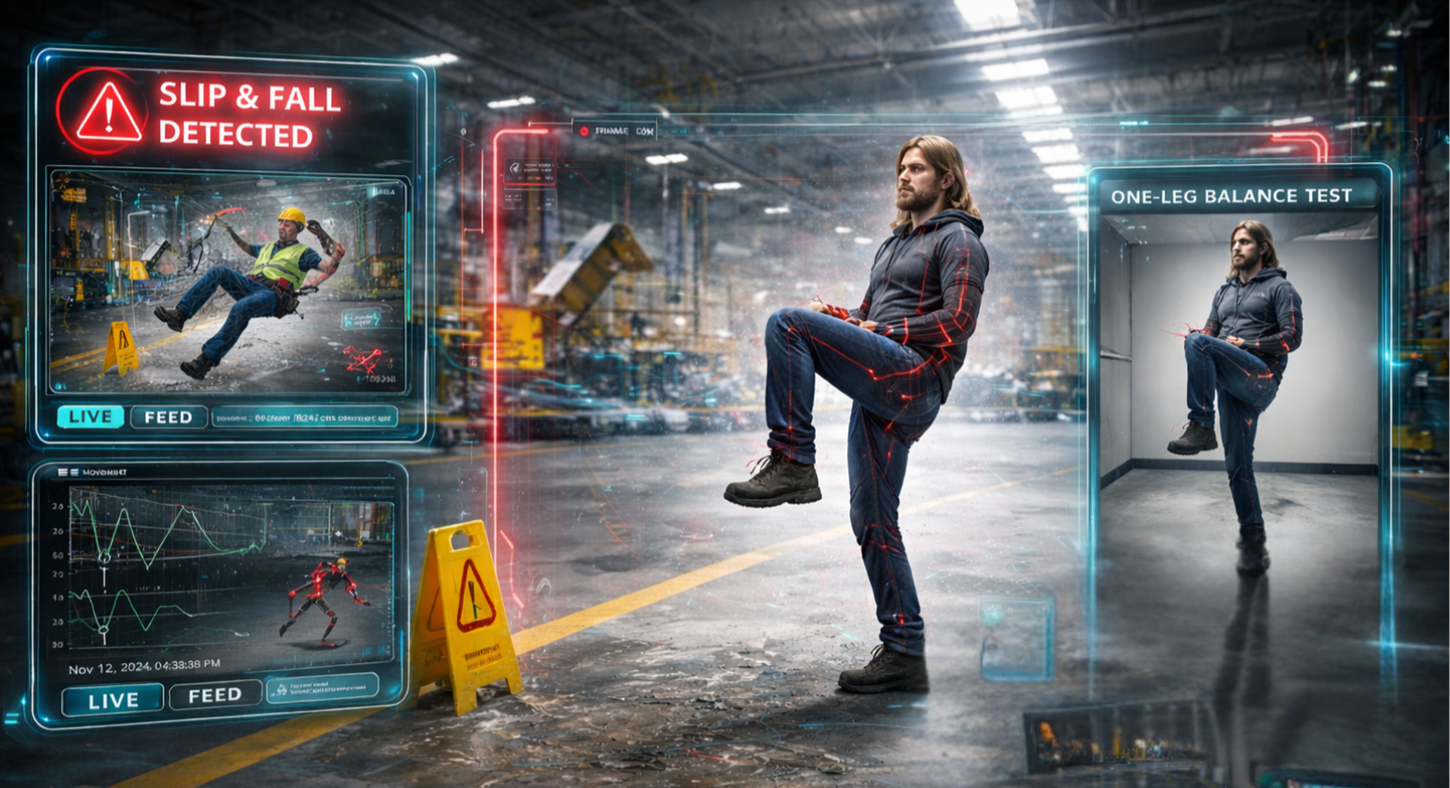
- Detect high-risk areas and behaviors in real time
- Monitor trends across teams, tasks, and environments
- Prioritize interventions based on actual data
- Implement targeted improvements before injuries occur
This shift empowers safety leaders to move from hindsight to foresight.
The Impact on Organizations
Adopting a proactive, data-driven approach to slip, trip, and fall prevention delivers measurable benefits:
- Reduced injury rates through early intervention
- Lower costs associated with claims, downtime, and lost productivity
- Improved operational efficiency by addressing risks at their source
- Stronger safety culture driven by awareness and accountability
Most importantly, it helps protect the workforce, ensuring employees return home safely each day.
Rethinking What’s “Unavoidable”
Slips, trips, and falls have long been viewed as unpredictable and difficult to control. But with the right tools and insights, that assumption is quickly becoming outdated.
By leveraging solutions like LiftSmart, organizations can gain visibility into risks that were once too complex or hidden to identify. What was once considered unavoidable can now be anticipated and prevented.
Looking Ahead
The future of workplace safety lies in proactive risk management. Organizations that embrace data, technology, and leading indicators will be better positioned to reduce injuries, control costs, and create safer environments.
LiftSmart represents more than just a tool; it’s a shift in mindset. From reacting to incidents to preventing them entirely.
If your organization is ready to take that next step, now is the time to rethink how you approach risk and what’s truly possible.

About the author
Philip Stotter, MS, CEP
Philip Stotter, MS, CEP has over 25+ years of experience in the medical, health, wellness, and professional sports industries. Clinician turned business developer, Philip is a sought-after industry speaker and professional consultant. His ground-breaking work in injury prevention, paired with the science of human movement, has put him at the forefront of product development with a multidisciplinary approach that integrates physiology, biomechanics, cutting-edge technologies, and data-driven research.