
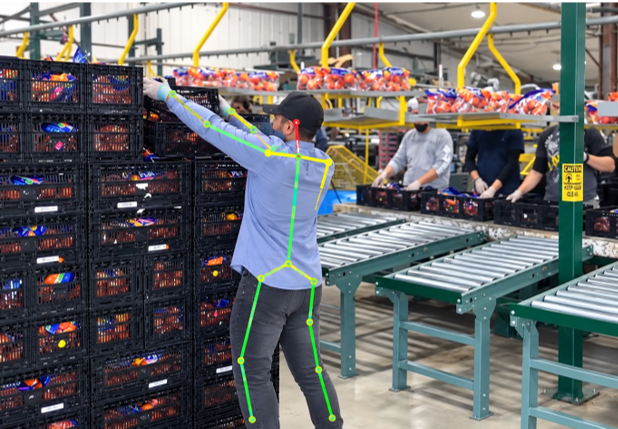
Motion Capture, Movement Variability, and the Misinterpretation of Workplace Injury Risk
Why measuring how workers move is only part of understanding their physical risk, and why physical capacity matters.
Technology is changing how organizations evaluate workplace ergonomics and identify potential injury risks. Advances in artificial intelligence, computer vision, and markerless motion capture now make it possible to analyze workers performing everyday job responsibilities and quantify movement patterns that were previously difficult to measure.
These advancements offer tremendous potential. Organizations can collect movement data more efficiently, identify potential ergonomic concerns, and gain additional insight into how employees interact with their work environments.
However, as these technologies become more widely adopted, an important question deserves greater attention:
Can we accurately determine a worker’s injury risk simply by analyzing how they move while performing their job? - The answer is more complicated than many technology providers would have us believe.
Human movement is highly individual. It is influenced by anatomy, strength, mobility, physical conditioning, experience, previous injuries, environmental conditions, and years of adaptation to physical demands.
To assume that movement outside a predefined normative range automatically represents increased injury risk is an oversimplification of human biomechanics.
More importantly, it can lead to inaccurate conclusions about workers who have successfully performed physically demanding jobs for years.
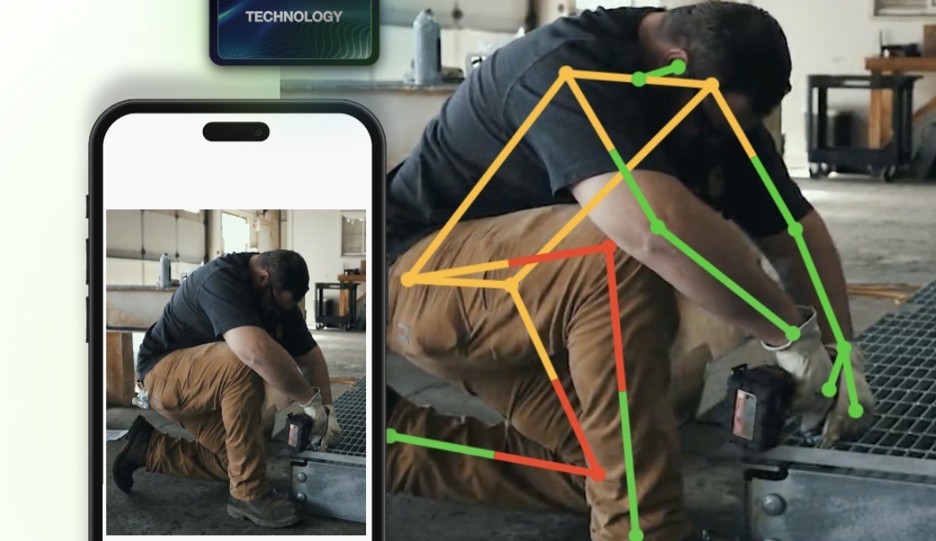
Human Movement Is Not One-Size-Fits-All
One of the fundamental principles of human movement is variability.
Two individuals can perform the exact same task using very different movement strategies. Differences in body proportions, joint mobility, strength, coordination, and physical capabilities influence how each person approaches a physical activity.
Neither individual necessarily has an incorrect movement pattern.
In fact, movement variability is a normal characteristic of human performance. Our bodies continually make adjustments to accomplish physical objectives within the limitations and capabilities of our individual systems.
Consider two employees performing the same material-handling task.
One may demonstrate greater trunk flexion, while another may utilize more hip and knee flexion. One may have a wider stance, while another maintains a narrower base of support.
A motion capture system may identify these differences and compare them against established movement criteria.
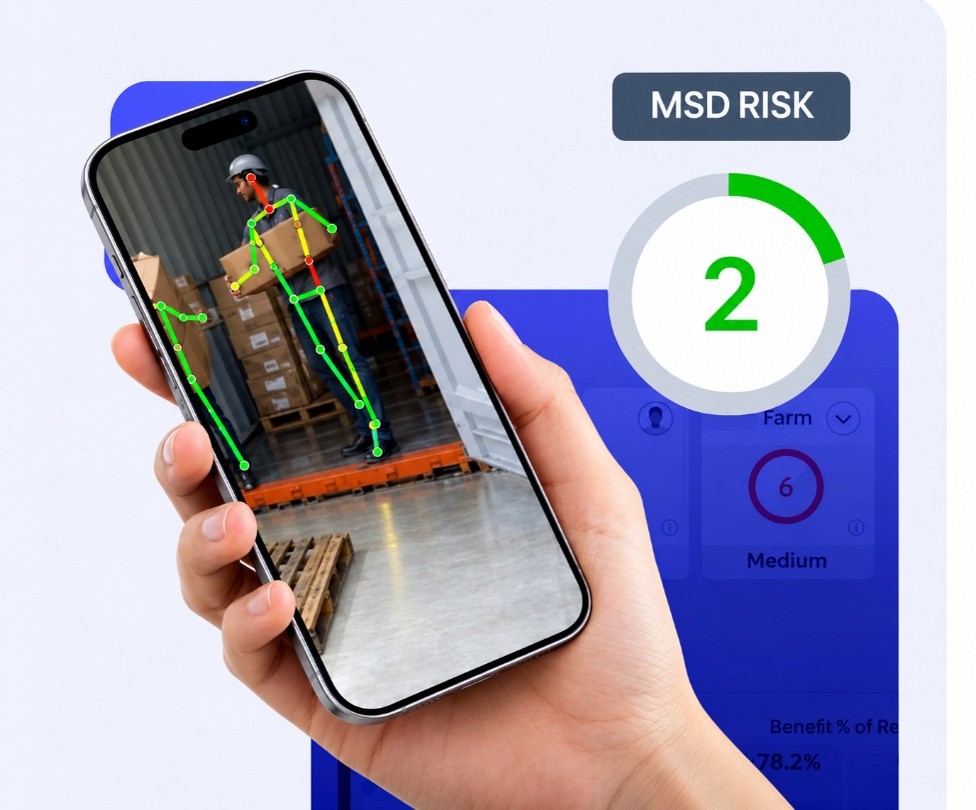
But does one pattern automatically indicate greater injury risk?
Not necessarily.
A movement deviation is an observation. Understanding whether that deviation represents a meaningful exposure requires additional information about the task, the individual, and the physical demands involved
Different does not automatically mean dangerous.
Workers Adapt to Their Jobs Just Like Athletes Adapt to Their Sports
Consider the physical demands placed on professional athletes.
A baseball player develops specific movement strategies through thousands of repetitions. A pitcher adapts to the mechanical and physical demands of throwing. A golfer develops coordination and movement patterns specific to the demands of the golf swing.
These adaptations are not accidental. They are the result of repeated exposure, training, experience, and physical development.
Workers experience similar adaptations.
Someone who has performed a physically demanding job for 15 years is not necessarily moving the same way they did on their first day.
Over time, workers develop task-specific coordination, physical capacity, movement efficiencies, and strategies for accomplishing their responsibilities.
They learn how to interact with their work environment.
This is an important consideration when evaluating movement data.
Imagine a worker who has performed a particular material-handling job for 15 years without an injury. Their movement pattern may differ considerably from that of a new employee or from a standardized biomechanical reference model.
Should we automatically classify that experienced worker as high risk because their movement falls outside a predefined normative range?
That conclusion ignores 15 years of physical adaptation and successful task performance.
This does not mean an experienced worker cannot develop an injury or that years without injury guarantee future safety. Cumulative exposure, fatigue, workload, and changing physical capabilities still matter.
However, experience and adaptation are relevant context that should not be overlooked.
The human body adapts to physical demands. Any meaningful assessment of human movement should account for that reality.
Compensation Is Not Automatically a Risk Indicator
Another important consideration is movement compensation.
People naturally modify how they move to accommodate their physical characteristics, limitations, previous injuries, mobility restrictions, or environmental constraints.
Compensation is part of how humans interact with their physical world.
For example, an individual with limited ankle mobility may demonstrate greater movement through the hip or trunk when performing a squat-like activity.
A motion capture system may identify the difference and flag the movement as outside an expected range.
But what does that actually tell us?
It tells us that the individual is using a different movement strategy.
It does not independently establish that the strategy is harmful, that the individual lacks the physical capacity to perform the task, or that an injury is likely to occur.
Some compensations may create additional physical demands and warrant further investigation. Others may be effective strategies that allow someone to perform a task comfortably and successfully.
The distinction requires professional interpretation.
We should not confuse the identification of a movement deviation with the determination of an injury risk.
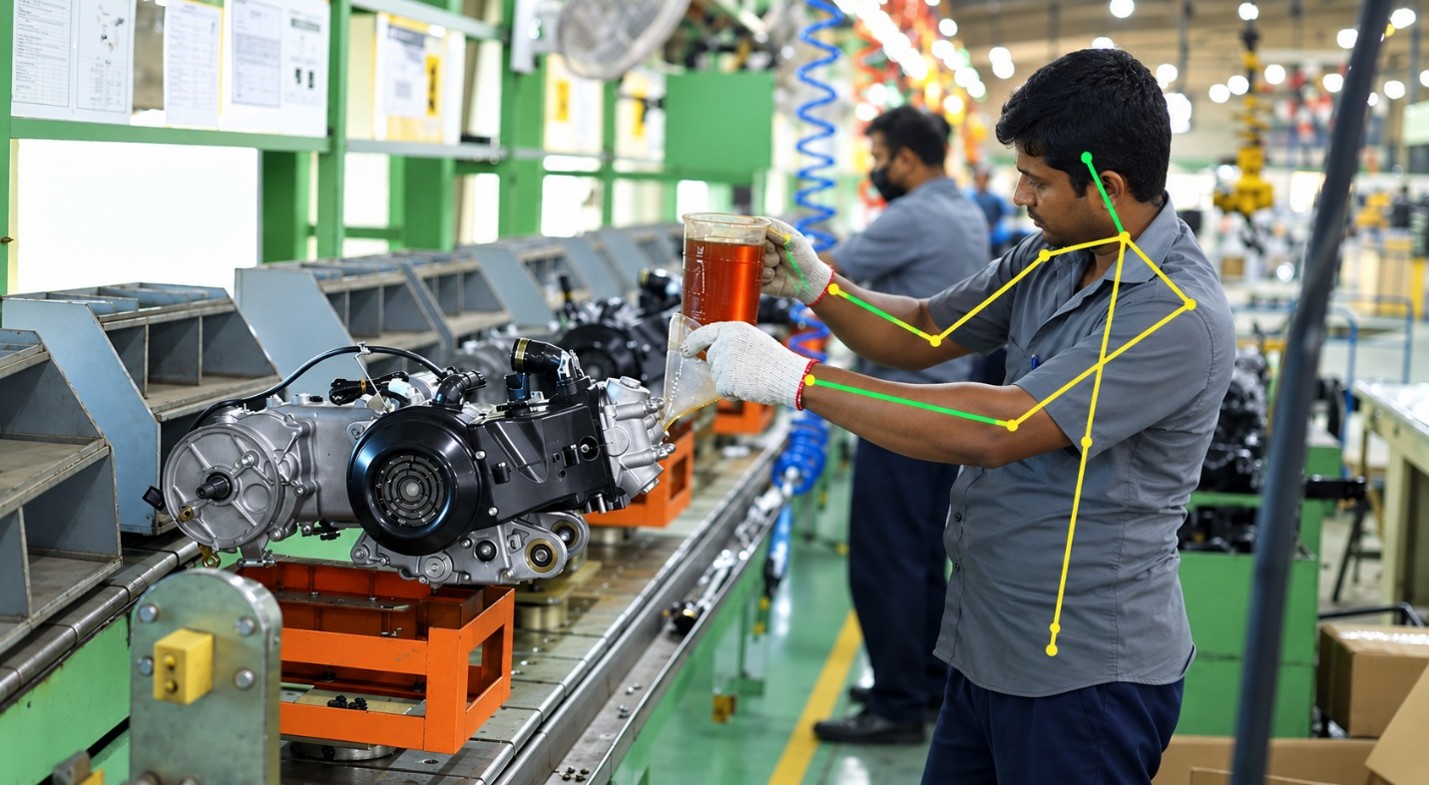
The Problem With Using Motion Capture Alone to Determine Workplace Risk
Companies are increasingly introducing AI-driven motion capture technologies to analyze employees performing work tasks.
These systems can identify joint positions, estimate angles, quantify movement patterns, and compare observations against predefined ergonomic criteria.
These capabilities can be useful.
However, there is an important distinction between identifying potentially concerning movement patterns and determining an individual’s actual physical risk.
A camera can capture movement. Software can quantify that movement. An algorithm can compare the results against established criteria.
But none of those steps automatically establishes the relationship between that movement and an individual’s probability of injury.
There are several critical considerations.
Normative ranges are reference points, not universal standards for safe movement.
A population-based reference range provides useful comparative information. However, falling outside that range does not automatically mean an individual is performing a task unsafely.
Movement does not tell us the entire story about physical exposure.
The forces involved, load magnitude, frequency, duration, repetition, recovery time, and environmental conditions all contribute to the physical demands of a job.
A movement score is not an injury prediction.
An algorithm may assign a score based on predefined movement criteria. That score should not be interpreted as a validated prediction of injury unless the methodology has been appropriately validated for that specific purpose.
Technology requires context and expertise.
Without an understanding of biomechanics, human performance, occupational demands, and individual physical capabilities, movement data can be misinterpreted.
This is where the application of motion capture technology becomes particularly important.
The concern is not the technology itself. The concern is what happens when measurements are treated as conclusions without sufficient professional interpretation.
The DataFit Approach: Understanding Physical Capacity, Not Just Movement
At DataFit, we believe technology should do more than simply identify how someone moves while performing a job.
We believe organizations need a better understanding of the relationship between an individual’s physical capabilities and the demands of their work.
This is where our approach differs.
We apply principles from sports science and human performance to occupational health and safety.
Think of the concept of the industrial athlete.
Professional sports organizations don’t evaluate athletes exclusively by observing their movements during competition. They assess physical capabilities, strength, mobility, power, coordination, and other performance characteristics to understand whether an athlete has the physical capacity to meet the demands of their sport.
Why should we approach the industrial athlete differently?
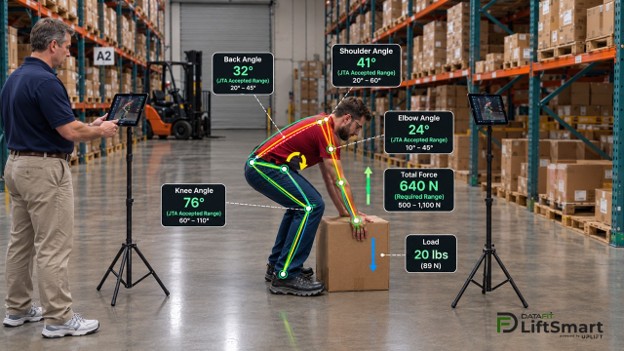
At DataFit, we use advanced, true 3D motion capture technology to simultaneously capture movement from multiple angles, providing direct, objective measurements as part of a comprehensive physical assessment process. But the technology is only one component.
Our assessments are backed by professionally trained data analysts and 30 years of technology-captured data. This expertise enables us to accurately interpret movement patterns and performance metrics within the context of human movement, physical performance, and occupational demands.
We focus on physical capacity relative to job demands, not simply whether someone moves outside a predefined normative range while performing a task.
That distinction is important.
Our approach emphasizes:
- Objective physical capacity assessments: Understanding an individual’s measurable physical capabilities.
- Job Task Analysis (JTA): Establishing the actual physical requirements of specific job responsibilities.
- Capacity-to-demand comparisons: Evaluating how individual capabilities align with the physical requirements of the job.
- Professional interpretation: Applying sports science expertise to understand what the measurements mean in the context of the individual and the work.
- Ongoing assessment: Establishing baselines and monitoring changes over time, including opportunities to evaluate workers returning from injury or experiencing changing physical demands.
Rather than assuming every person should demonstrate the same movement pattern, we recognize that people have different physical characteristics and capabilities.
The objective is to understand whether their physical capacity aligns with the demands placed upon them and where opportunities exist to improve that relationship.
Understanding the Worker-to-Job Relationship
One of the biggest opportunities in occupational health and safety is moving beyond isolated movement observations and developing a more comprehensive understanding of the worker-to-job relationship.
A job has physical requirements.
A worker has physical capabilities.
The question is how those two elements align.
For example, a job may require repeated lifting, carrying, pushing, pulling, reaching, or maintaining specific working postures.
Understanding those requirements is essential.
Equally important is understanding the individual’s ability to meet them.
When organizations objectively evaluate both sides of that relationship, they can make more informed decisions about:
- New-hire physical capacity and job placement.
- Identifying opportunities for ergonomic improvements.
- Developing individualized conditioning and prevention strategies.
- Supporting return-to-work decisions.
- Evaluating changing physical capabilities over time.
- Identifying opportunities for accommodations and job modifications.
- Reducing unnecessary physical demands and improving workforce sustainability.
This is a much broader conversation than whether an employee demonstrates a particular movement pattern during a video assessment.
It is about understanding the physical demands of work and the human capabilities required to meet those demands.
Technology Is Only as Valuable as the Interpretation Behind It
There is no question that AI, computer vision, and motion capture will continue to influence the future of occupational health and safety.
These technologies offer tremendous opportunities to improve how organizations collect and evaluate information.
But we must be careful not to confuse technological advancement with scientific certainty.
More data does not automatically mean better decisions.
A system capable of measuring hundreds of movement variables does not necessarily understand the worker, their physical adaptations, or the actual demands of their job.
And a risk score generated by an algorithm should never replace sound professional judgment.
The future of occupational health and safety should not be about making every worker conform to a standardized movement model.
It should be about understanding human variability, recognizing physical adaptation, evaluating occupational exposures, and objectively measuring the capabilities required to perform work.
At DataFit, we believe the industrial athlete deserves the same thoughtful application of sports science and human performance principles that have helped advance professional athletics.
Measure objectively. Interpret professionally. Assess capacity. Understand the demands.
Because the goal isn’t to identify workers who move differently.
The goal is to understand the relationship between people and the physical demands of their work, and use that understanding to help create safer, more sustainable workplaces.

About the author
Philip Stotter, MS, CEP
Philip Stotter, MS, CEP has over 25+ years of experience in the medical, health, wellness, and professional sports industries. Clinician turned business developer, Philip is a sought-after industry speaker and professional consultant. His ground-breaking work in injury prevention, paired with the science of human movement, has put him at the forefront of product development with a multidisciplinary approach that integrates physiology, biomechanics, cutting-edge technologies, and data-driven research.