
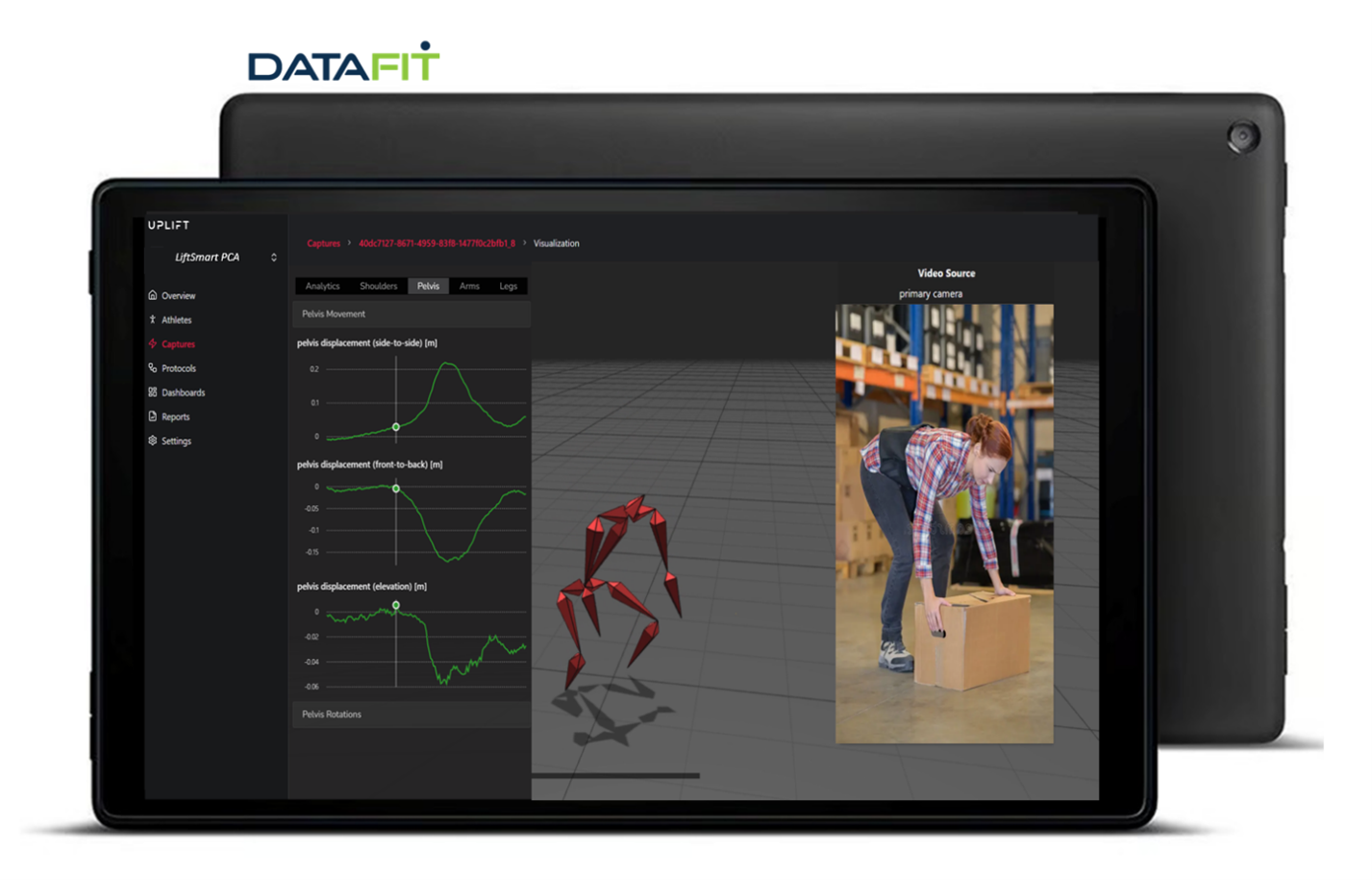
The Missing Safety Metric
Why Measuring Worker Functionality Is the Most Underrated Advantage in Workplace Safety
Most organizations track safety by looking backward — injuries, OSHA recordables, near-misses, and incident reports. Useful? Yes. But they only tell you what already happened.
Measuring worker functionality flips the script. Instead of reacting to injuries, you begin predicting and preventing them.
Here’s why this shift matters more than ever.
- Moving Safety From Reactive to Predictive
Traditional safety metrics like TRIR, DART, lost-time incidents, and OSHA logs are lagging indicators. They tell you when something went wrong.
Functional performance metrics like mobility, balance, strength, asymmetry, fatigue tolerance identify risk before an injury occurs by detecting:
- Declines in movement quality
- Reduced capacity
- Vulnerability under load
This is the difference between injury response and risk prevention.
- Physical Capacity Is the Root of Most Injuries
Most workplace injuries happen when job demand exceeds worker capacity. That mismatch leads to:
- Compensations
- Fatigue
- Microtrauma
- Acute injury
By measuring things like joint mobility, trunk stability, load tolerance, balance, and overall movement quality, you can quantify that mismatch, not guess at it.
This matters most in high-load environments like manufacturing, healthcare, logistics, and construction.
- Functionality Metrics Reduce Variability Across Sites
If you’re pushing for standardized employee testing, functionality metrics give you:
- A uniform baseline across all facilities
- Comparable data between locations
- Objective scoring instead of supervisor subjectivity
The result: stronger consistency, less bias, and defensible documentation.
- Better Job Placement & Return-to-Work Decisions
Without functionality data, decisions are made based on:
- “They look fine.”
- “They’ve been cleared.”
- “They say they’re ready.”
With objective measurement, you know:
- Are they stable under load?
- Do they compensate during repetitive tasks?
- Does fatigue change their balance or asymmetry?
- Are they meeting job-specific thresholds?
This improves placement, reduces re-injury, and strengthens modified duty recommendations.
- Functionality Data Reveals Systemic Risk Patterns
Once you measure functionality at scale, trends emerge:
- Shift-related fatigue
- Mobility decline in aging workers
- High-risk job roles
- Seasonal variation
- Site-specific deficiencies
With this visibility, you can deploy targeted interventions, ergonomic redesigns, conditioning programs, and equipment changes.
Risk becomes measurable, not anecdotal.
- Stronger Legal and Compliance Defensibility
Objective functional metrics provide:
- Documented baseline capacity
- Quantified change over time
- Data-supported clearance decisions
- Less reliance on subjective clinical opinions
In litigation, workers’ comp disputes, or OSHA review, objective data carries weight. And it protects the employer and employee equally.
- Functionality Drives Productivity — Not Just Safety
Functional capacity improves:
- Endurance
- Stability
- Work quality
- Error rates
Safety and productivity are not competing priorities. When worker capacity improves, both scale upward together.
The Real Strategic Shift
Traditional Risk Model:
Hazard + Exposure = Risk
Modern Capacity-Based Model:
Hazard + Exposure – Functional Capacity = Real Risk
Increase functional capacity, and you reduce real risk even if the job itself stays the same.
That is the leverage most organizations are missing.
Bottom Line
- Measuring worker functionality:
- Identifies risk before injury
- Standardizes safety across sites
- Strengthens return-to-work decisions
- Reveals systemic vulnerabilities
- Improves legal defensibility
- Boosts both safety and performance
This isn’t just a health initiative. It’s a risk management strategy and one that’s becoming essential as organizations push for safer, more productive, more data-driven operations.

About the author
Philip Stotter, MS, CEP
Philip Stotter, MS, CEP has over 25+ years of experience in the medical, health, wellness, and professional sports industries. Clinician turned business developer, Philip is a sought-after industry speaker and professional consultant. His ground-breaking work in injury prevention, paired with the science of human movement, has put him at the forefront of product development with a multidisciplinary approach that integrates physiology, biomechanics, cutting-edge technologies, and data-driven research.