
Why Camera Count Matters in Markerless Motion Capture
Single-Camera vs. Multi-Camera Systems for Ergonomics and Workplace Safety
Markerless motion capture is increasingly used in workplace ergonomics and occupational safety programs to analyze human movement, identify injury risk factors, and support data-driven decision-making around musculoskeletal disorder (MSD) prevention. As adoption grows, one technical factor consistently has an outsized impact on performance: camera configuration.
Whether a system uses a single camera or multiple synchronized cameras significantly influences measurement accuracy, depth perception, and the reliability of biomechanical outputs used in ergonomic analysis.
The Role of Motion Capture in Workplace Safety
In ergonomics and occupational health, motion capture systems are used to evaluate real-world movement patterns such as:
- Lifting and lowering mechanics
- Repetitive motion and fatigue-related behavior
- Postural loading and joint positioning
- Twisting, reaching, pushing, and pulling tasks
These measurements often feed into established ergonomic frameworks such as RULA, REBA, and POET, as well as biomechanical models that estimate joint loading and injury risk.
Because many of these outputs depend on precise joint angles and spatial positioning, the quality of the underlying motion capture system is critical.
Single-Camera Markerless Motion Capture
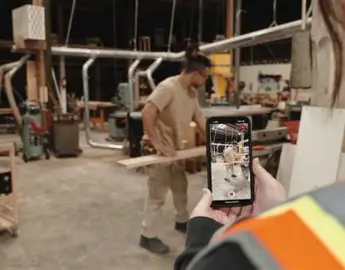
Single-camera systems typically rely on one RGB or depth sensor—such as a smartphone, tablet, or fixed camera—to estimate human pose using computer vision and machine learning models.
Where single-camera systems work well
Single-camera setups are generally effective for:
- Simple or mostly planar movements
- Short-duration assessments
- Controlled environments with minimal obstruction
- Basic screening or qualitative movement review
Their main advantage is accessibility: they are easy to deploy, require minimal setup, and can capture motion quickly.
Limitations of single-camera systems
Despite their convenience, single-camera systems have inherent technical constraints:
- Limited depth information
A single viewpoint must infer 3D position from 2D data, which can introduce estimation error. - Occlusion issues
Body parts can be hidden by tools, equipment, or the subject’s own body, reducing tracking reliability. - Reduced accuracy in complex tasks
Movements involving lifting, twisting, or multi-planar motion are more difficult to reconstruct accurately. - Higher variability in measurements
Small changes in camera placement or subject orientation can significantly affect results.
As a result, single-camera systems are often best suited for basic evaluation rather than detailed biomechanical decision-making.
Multi-Camera Markerless Motion Capture
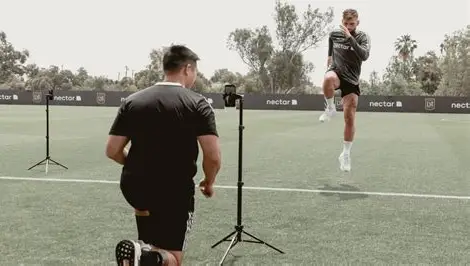
Multi-camera systems use two or more synchronized cameras to capture movement from different angles. These views are combined using triangulation to reconstruct an accurate 3D representation of the body.
Advantages of multi-camera systems
- True 3D reconstruction
Multiple viewpoints reduce reliance on inferred depth and improve spatial accuracy. - Reduced occlusion effects
If one camera view is blocked, another can often capture missing information. - Stable joint angle capture
Multi-view geometry improves consistency in calculating biomechanical variables such as spine flexion, shoulder elevation, and hip rotation. - Better performance in complex tasks
Dynamic movements such as lifting, carrying, and pushing are reliably captured.
Accuracy Differences in Practice
While performance depends on system design, calibration, and environment, multi-camera setups generally improve measurement stability over single-camera systems.
| Metric | Single Camera | Multi-Camera |
| Joint angle stability | Lower | Higher |
| Depth estimation | Inferred | Triangulated |
| Occlusion handling | Limited | Improved |
| Complex movement fidelity | Moderate to low | High |
In ergonomic contexts, even small improvements in joint angle accuracy can meaningfully affect risk scoring outcomes and biomechanical interpretations.
Why Accuracy Matters in Ergonomics
In occupational safety applications, measurement precision directly impacts:
- Ergonomic risk classification
- Estimated spinal and joint loading
- Identification of high-risk tasks
- Design of engineering and administrative controls
Because these decisions can influence workplace interventions, staffing practices, and injury prevention strategies, data reliability becomes essential.
Why DataFit and Uplift Labs Teamed Up
As motion capture has matured, a key challenge has emerged: translating high-quality movement data into validated, real-world occupational insight at scale.
To address this, DataFit and Uplift Labs formed a partnership combining biomechanics expertise with advanced motion capture technology.
DataFit: decades of occupational biomechanics and workforce data
DataFit brings nearly 30 years of experience in workforce evaluation and ergonomic assessment, supported by a large dataset of over 500,000 physical capability assessments. This foundation includes:
- Job-specific strength and movement benchmarks
- Functional capacity and lifting assessments
- Injury mechanism and risk modeling
- Occupational performance databases across industries
This dataset provides long-term, real-world context for understanding how people move in work environments and how those movements relate to injury risk.
Uplift Labs: multi-camera markerless motion capture
Uplift Labs contributes AI-driven, multi-camera markerless motion capture technology designed to reconstruct human motion in 3D using synchronized video inputs.
Key capabilities include:
- Full-body 3D motion capture
- Improved depth accuracy through multi-view triangulation
- Reduced occlusion-related tracking loss
- Consistent joint angle and segment motion tracking
This approach provides higher-fidelity movement data compared to single-camera systems, particularly in complex or industrial tasks.
What They Built Together: LiftSmart
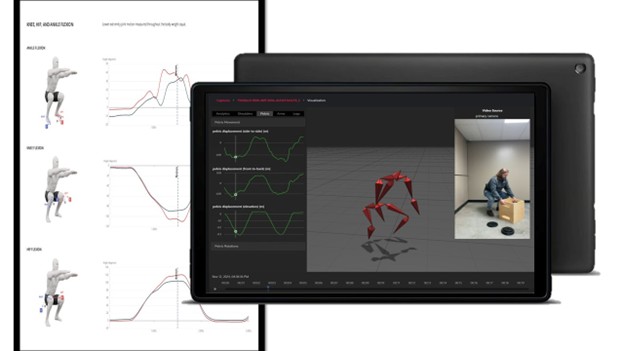
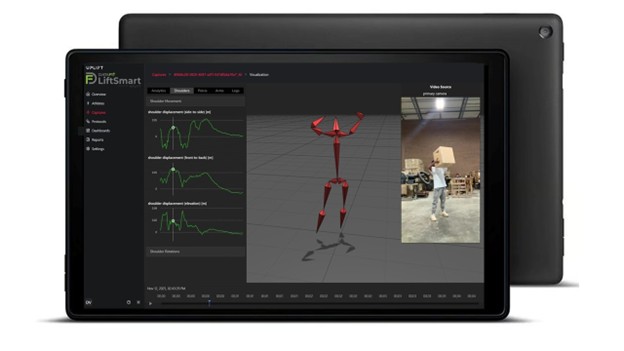
The collaboration between DataFit and Uplift Labs resulted in LiftSmart, a biomechanics and workforce assessment system that integrates high-accuracy motion capture with large-scale occupational data modeling.
LiftSmart combines:
- Uplift Labs’ multi-camera 3D motion capture system
- DataFit’s validated occupational biomechanics database
- Historical strength and movement benchmarks
- Injury and risk modeling frameworks
What LiftSmart is used for
LiftSmart is designed to translate captured movement into structured workplace insights, including:
- Post-offer employment testing (POET)
- Functional movement and capability assessment
- Ergonomic risk evaluation
- Job task simulation analysis
- Movement pattern benchmarking
The system converts raw motion capture data into standardized outputs that can support hiring, job matching, return to work, and workplace safety initiatives.
Why this integration matters
The key value of LiftSmart lies in combining two layers of information:
- High-fidelity 3D movement data from multi-camera capture
- Large-scale occupational biomechanics evidence from historical workforce datasets
This allows movement to be evaluated not just visually or statistically, but in the context of real-world job performance and injury history patterns.
In practice, this enables:
- More consistent ergonomic assessments across job types
- Data-driven comparison of movement against workforce norms
- Scalable functional capacity evaluation
- Improved visibility into injury risk factors during task performance
The Broader Shift in Workplace Biomechanics
Systems like LiftSmart reflect a broader shift in occupational safety toward:
- Objective measurement of human movement
- Data-driven ergonomic risk modeling
- Integration of AI and biomechanics
- Standardized functional capacity evaluation at scale
Rather than relying solely on observation or static assessments, LiftSmart combines motion capture with large datasets to produce repeatable, standardized, on-demand evidence-based insights.
Conclusion
As workplace safety and ergonomic analysis continue to evolve, the key question is no longer simply whether movement can be captured—but whether it can be captured accurately enough to support real-world decisions about human health, job design, and injury prevention.
Single-camera systems have helped make motion capture more accessible. Many of these tools rely on a simplified approach: a digital skeleton overlay that highlights risk visually, often turning red or flagging segments when movement exceeds certain thresholds. While this can be useful for quick feedback or general awareness, it has important limitations when used for serious biomechanical evaluation.
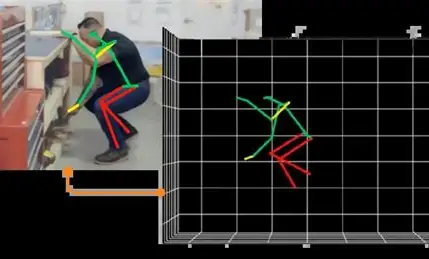
In practice, this type of simplified single-view model often struggles to reflect true human movement variability. Real workplace motion is highly dynamic—affected by occlusion, camera angle, depth ambiguity, and task complexity. When depth is inferred from a single perspective, even small changes in posture or positioning can lead to significant differences in estimated joint angles. As a result, the “risk visualization” (such as a skeleton turning red) may not consistently align with how the body is actually moving in three-dimensional space.
This creates a gap between visual feedback and biomechanical validity. The system may appear intuitive, but the underlying representation of movement can lack the precision needed for consistent ergonomic scoring, especially in complex tasks like lifting, twisting, or asymmetric load handling.
Multi-camera systems address many of these limitations by reconstructing movement in true 3D, reducing occlusion errors and improving spatial accuracy. However, even improved motion capture alone is not sufficient unless it is grounded in real occupational context.
This is where LiftSmart stands apart.
By combining Uplift Labs’ high-fidelity multi-camera markerless motion capture with DataFit’s nearly three decades of occupational biomechanics research and a dataset built from more than 500,000 real-world assessments, LiftSmart goes beyond visualization or raw kinematics. It interprets movement through validated workforce benchmarks, documented injury mechanisms, and job-specific biomechanical models.
Instead of relying on simplified risk overlays or isolated pose estimation, LiftSmart integrates movement data into a broader framework of real occupational performance. This allows for a more consistent translation from motion capture to meaningful ergonomic insight, one that reflects both how people move and what those movements mean in real workplace conditions.
The result is a system designed not just to display movement or flag potential risk visually, but to quantify, contextualize, and validate it against real human performance data at scale.
In a field where small inaccuracies can significantly alter risk interpretation and workplace decisions, LiftSmart represents a shift toward a more grounded approach, one that combines precision capture technology with large-scale biomechanical evidence to deliver a higher standard for occupational safety analysis.

About the author
Philip Stotter, MS, CEP
Philip Stotter, MS, CEP has over 25+ years of experience in the medical, health, wellness, and professional sports industries. Clinician turned business developer, Philip is a sought-after industry speaker and professional consultant. His ground-breaking work in injury prevention, paired with the science of human movement, has put him at the forefront of product development with a multidisciplinary approach that integrates physiology, biomechanics, cutting-edge technologies, and data-driven research.